Shipping
Glovis Leader: the first car carrier built for 10,800 cars
Fourteen decks, 230 meters long and as tall as a 16-story building. A look inside the first ship designed to carry more than 10,000 vehicles.
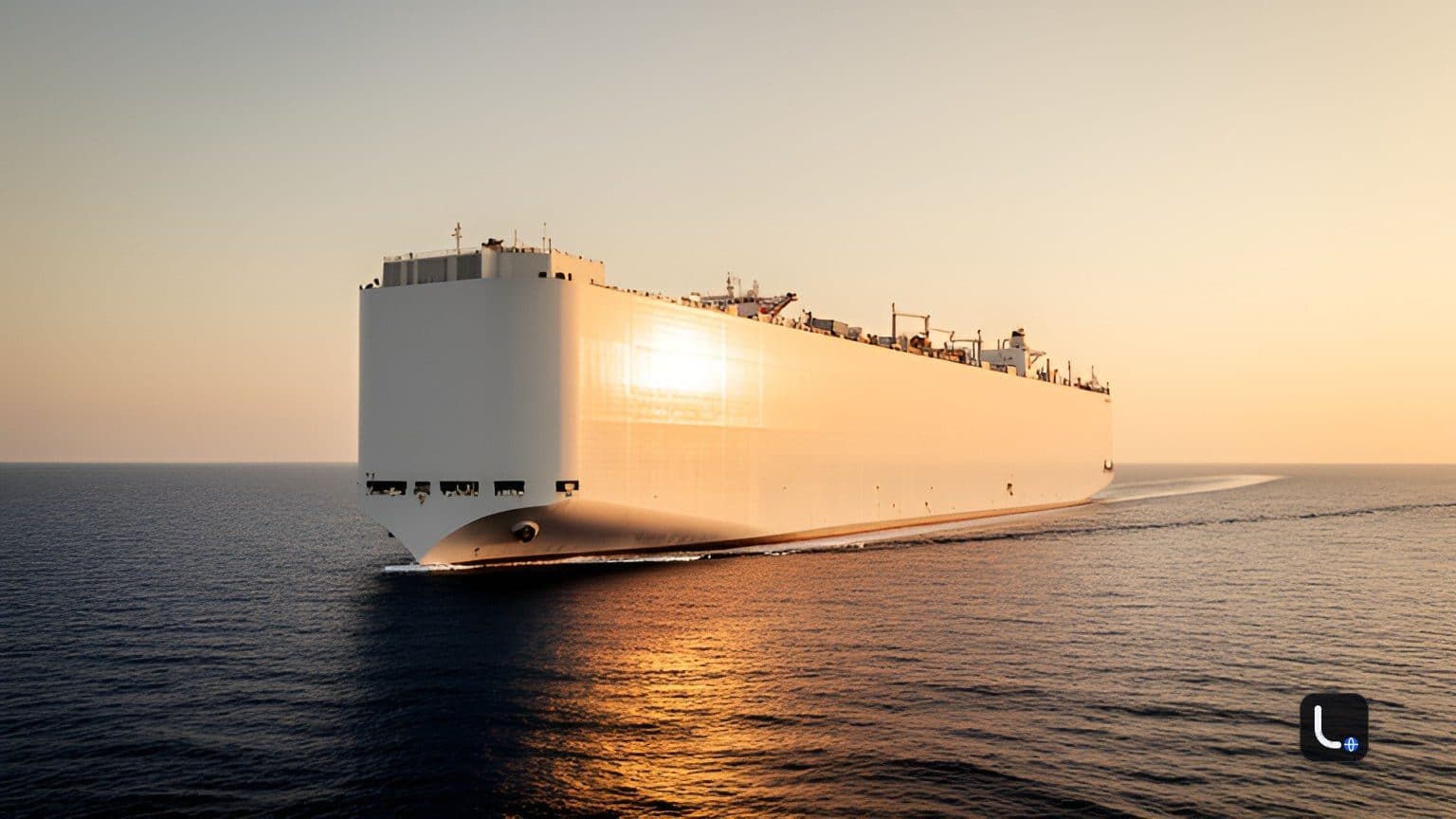
Most people never see how a car crosses an ocean. It drives up a ramp into a ship that looks like a giant floating shoebox, and comes off weeks later on another continent. In April 2026, the biggest of those ships so far went into service.
Meet the Glovis Leader
The Glovis Leader was delivered on April 28, 2026 by Guangzhou Shipyard International in China. It is described as the first car and vehicle carrier in the world to exceed 10,000 units, with room for up to 10,800 standard-sized cars (The Maritime Executive).
- Length: 230 meters (755 feet). Width: 40 meters (131 feet).
- Height: about 48 meters, roughly the height of a 16-story building (China Daily).
- 14 cargo decks.
- Cruising speed: 19 knots.
- Dual-fuel engines that run on liquefied natural gas (LNG) or conventional fuel, plus shore power so it can plug in at port.
- Owned by South Korea’s HMM and chartered long-term to Hyundai Glovis. Registered in Panama.
Unless noted, figures are from The Maritime Executive.
Built for more than cars
The ship was designed to carry electric vehicles, hydrogen vehicles and heavy trucks as well as ordinary cars (The Maritime Executive). The design work came from the Shanghai Merchant Ship Design and Research Institute, and both the designer and the shipyard belong to China State Shipbuilding Corporation (China Daily).
How big is 10,800 cars?
Picture an average car at about 4.5 meters long. Parked bumper to bumper, 10,800 of them would stretch close to 50 kilometers, about 30 miles. That is our own rough math, but it gives a sense of how much a single sailing can move.
Why ships keep getting bigger
Bigger ships move more cars per voyage, which lowers the cost of each one. Hyundai Glovis plans to grow to a fleet of 128 vessels with capacity for 5 million vehicles a year by 2030, and the Glovis Leader is the first of a series (The Maritime Executive).
What this means for your cars
Ships like this are roll-on/roll-off (RoRo) carriers: cars are driven on and off under their own power. The other way to ship a car overseas is inside a sealed container. Each has its strengths, and we explain them in our guide to RoRo or container shipping.
Whichever you choose, we book the space, get the car to the right U.S. port, and handle the export paperwork, so you only have to track it until it lands.